
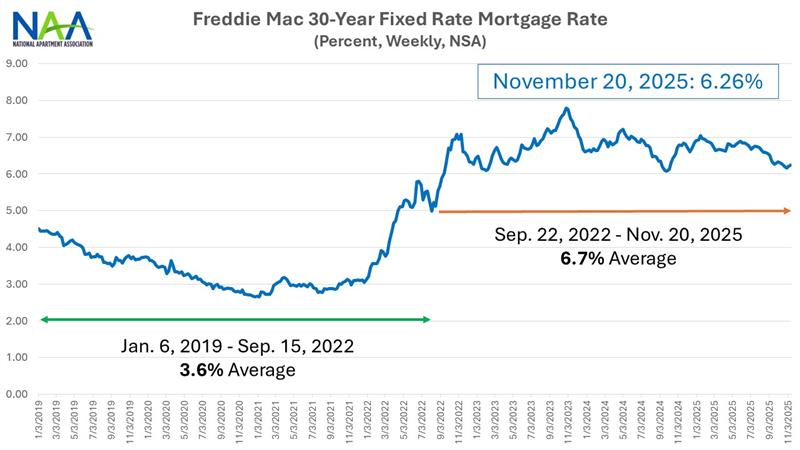
The Freddie Mac fixed rate for a 30-year loan rose for the third consecutive week, to 6.26%, highlighting cautious financial markets navigating the slow incoming trickle of economic data as government agencies ramp up their operations. The reopening of the federal government led to a slight rebound in the 10-year Treasury yield in the first half of the week, as investors welcomed the positive development. Markets will gain more clarity about delayed economic indicators in the weeks ahead.
This week, the Census Bureau released August numbers for new construction and manufactured goods orders and shipments. Construction spending picked up during the month but remained below last year’s levels. Notably, spending on private residential construction advanced in August. Meanwhile, new orders for manufactured goods rebounded in August, after two consecutive monthly decreases. Inventories also rose, as companies prepared for the upcoming last quarter’s holiday shopping season.
More recent construction data, however, show a market struggling with weak demand. The National Association of Home Builders’ monthly confidence index remained gloomy in November. Over two-thirds of builders reported using incentives, and 41% slashed prices on new homes by an average of 6% during the month.
There are about 1.1 million active listings on the market, showing a 15% increase from the same month last year, based on Realtor.com data. However, as is typical for this time of the year, fewer homeowners are choosing to put their homes on the market, keeping a lid on new supply.

For the buyer of a median-priced home of $425,000, using a 20% down payment and a 6.30% rate for a 30-year mortgage, the monthly payment totals approximately $2,700, including property taxes and home insurance. To put affordability in context, in November 2019, the monthly mortgage payment for a typical home was about $1,600, a 41% discount from today’s cost. At the current cost of financing a house purchase, it is not surprising that sales of existing homes are hovering near recessionary levels.
For housing markets, the balmy breeze of the Federal Reserve’s two rate cuts is frosting over in the premature winter of today’s housing landscape, where high prices, stiff interest rates and cold employment prospects are keeping buyers frozen out. While the sparkly lights of retail stores and jingle of early online discounts beckon Americans to shop for the holidays, housing affordability casts a cold blanket across most cities as we move toward the tail end of 2025.