
NAA Research conducted a research initiative to identify major uncertainties and explore how the industry is adapting and addressing them. The analysis below focuses solely on the survey results from independent rental owners (IROs), typically small-scale, often self-managed property owners, who face a unique operational reality shaped by limited scale, high autonomy and direct exposure to market volatility. While they share many concerns with institutional players, their responses and priorities diverge sharply due to their ownership structure and resource limitations.
Top Concerns for IROs: Expense Pressure and Policy Uncertainty Lead the Pack
IROs cited operating expenses (52%) as their most significant challenge in the past year, followed by policy uncertainty (43%) and revenue volatility (39%). These concerns reflect the vulnerability of smaller owners to cost increases and legislative changes, which they often absorb without institutional buffers or in-house legal and compliance teams.
Interestingly, interest rates, a top-tier issue for institutional owners, did not shake up the operations of most IROs. Fewer than 20% cited it as a highly significant operational threat, compared to 45% in the broader industry. This likely reflects conservative debt profiles, long-term fixed-rate loans or avoidance of high-leverage financing strategies. About half of IROs reported taking no action in response to rate hikes, while the other half delayed acquisitions or paused development efforts.
IROs Adjustments for Expense Management
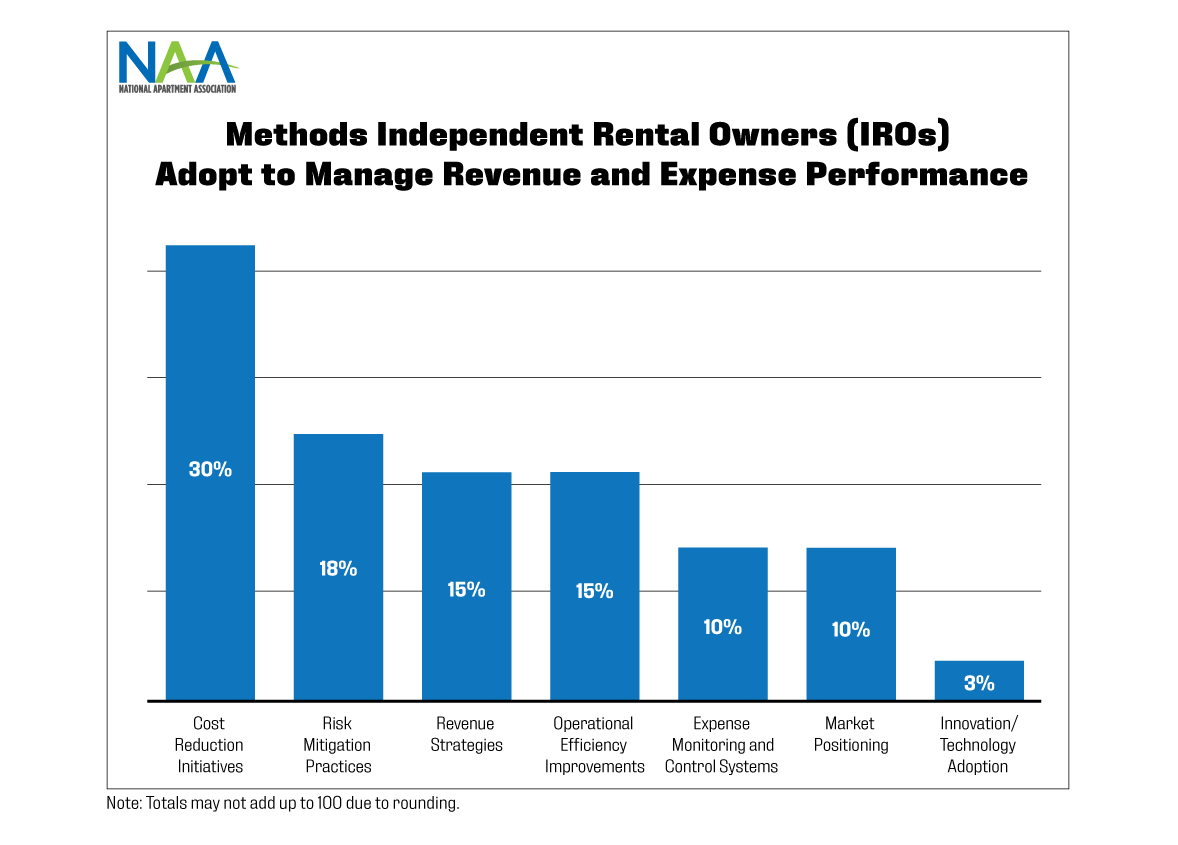
Faced with rising expenses, IROs are opting for simple straightforward, actionable strategies. Roughly 30% are restructuring budgets or renegotiating contracts, while another 18% are diversifying investments. Notably, more advanced levers like technology adoption and market positioning are far less common, highlighting a focus on immediate cost control over long-term transformation.
Fraud and Bad Debt: Managed with Simple Screening Tools
While fraud and bad debt affect all operators, only about 25% of IROs view it as a high-level concern. Those addressing it tend to rely on established screening tools (credit checks, background reports and employment verification). For small businesses, these low-cost, effective methods represent the extent of what is operationally feasible.
Centralization: Not a Priority for the Self-Managed Operator
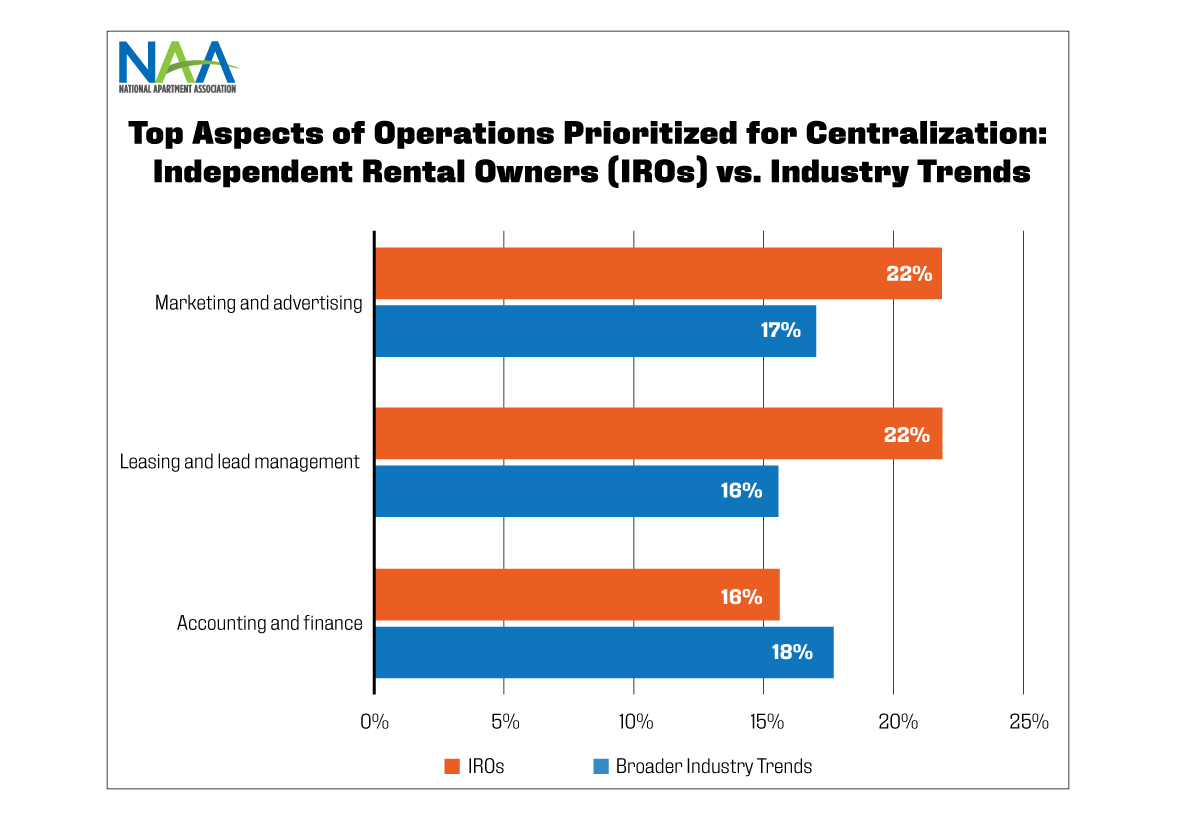
IROs diverge sharply from institutional owners in their attitudes toward centralization. Over half (57%) say centralization is not relevant to their operations. That’s not surprising as many respondents manage fewer than 1,000 units and handle most functions themselves. When asked what they might centralize in the future, leasing and marketing were the most frequently cited, differing from the broader market’s focus on accounting and finance. In essence, most IROs are already centralized because they are “the business.” The owner often functions as the operator, marketer, maintenance scheduler and leasing agent.
IROs Passive Stance to Construction Costs, Rooted in Limited Exposure
Construction cost is on the radar, with 35% labeling it a serious concern. Yet nearly 80% of IROs admitted they have no actionable plans in place to counter rising costs. This passivity is understandable – many IROs are not actively pursuing new development or large-scale renovations, so for now, construction cost pressures remain peripheral rather than pressing.
Policy Shifts: A Recognized Risk Without a Clear Strategy
Policy uncertainty is one area where IROs demonstrate awareness but limited strategic movement. Nearly half view it as a major long-term threat. However, 34% of respondents have taken no action, and among those who have, responses are modest: Delaying development, re-evaluating sourcing strategies or adjusting expenses.
Labor Strains and Strategic Growth: How IROs Are Weighing the Future
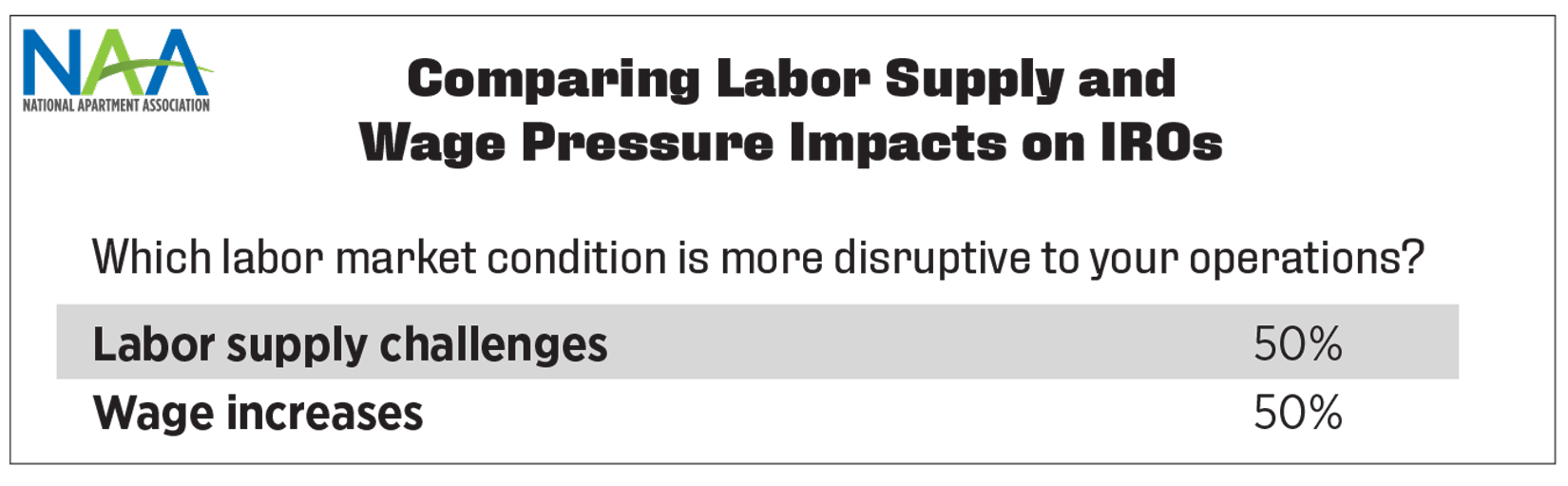
IROs are split on what’s hitting hardest: Half point to labor shortages, while the rest cite rising wages. Unlike the broader market, which largely views staffing scarcity as the bigger disruptor, IROs face a dual strain – either roles go unfilled or come at a premium. With limited scale, these shifts can be felt quickly.
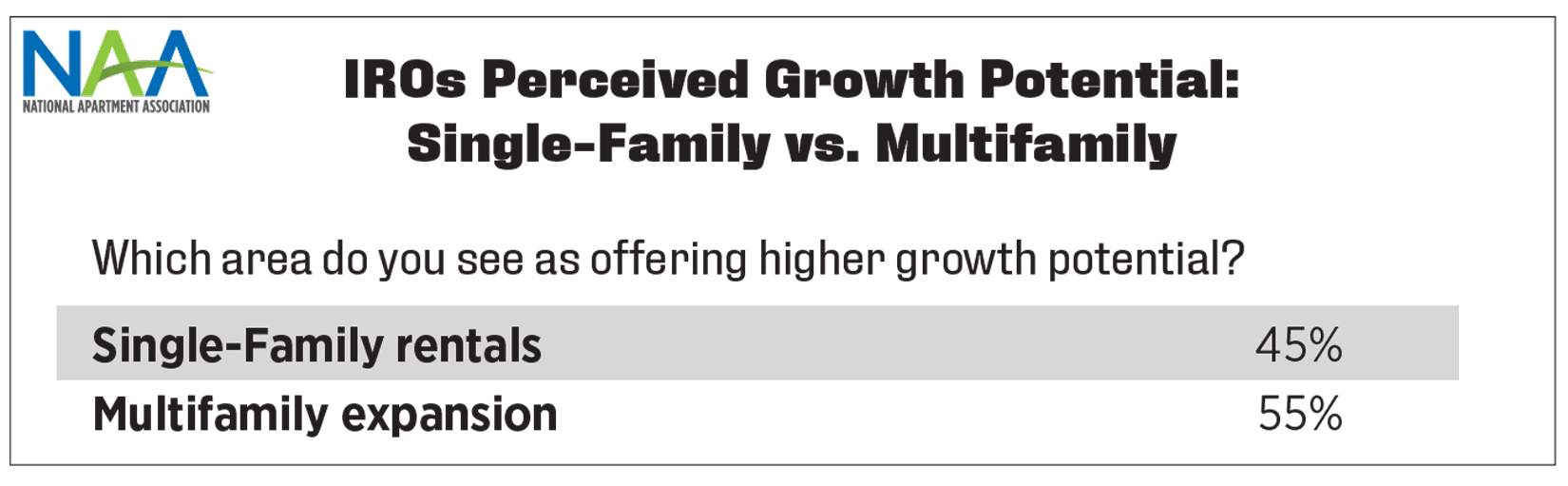
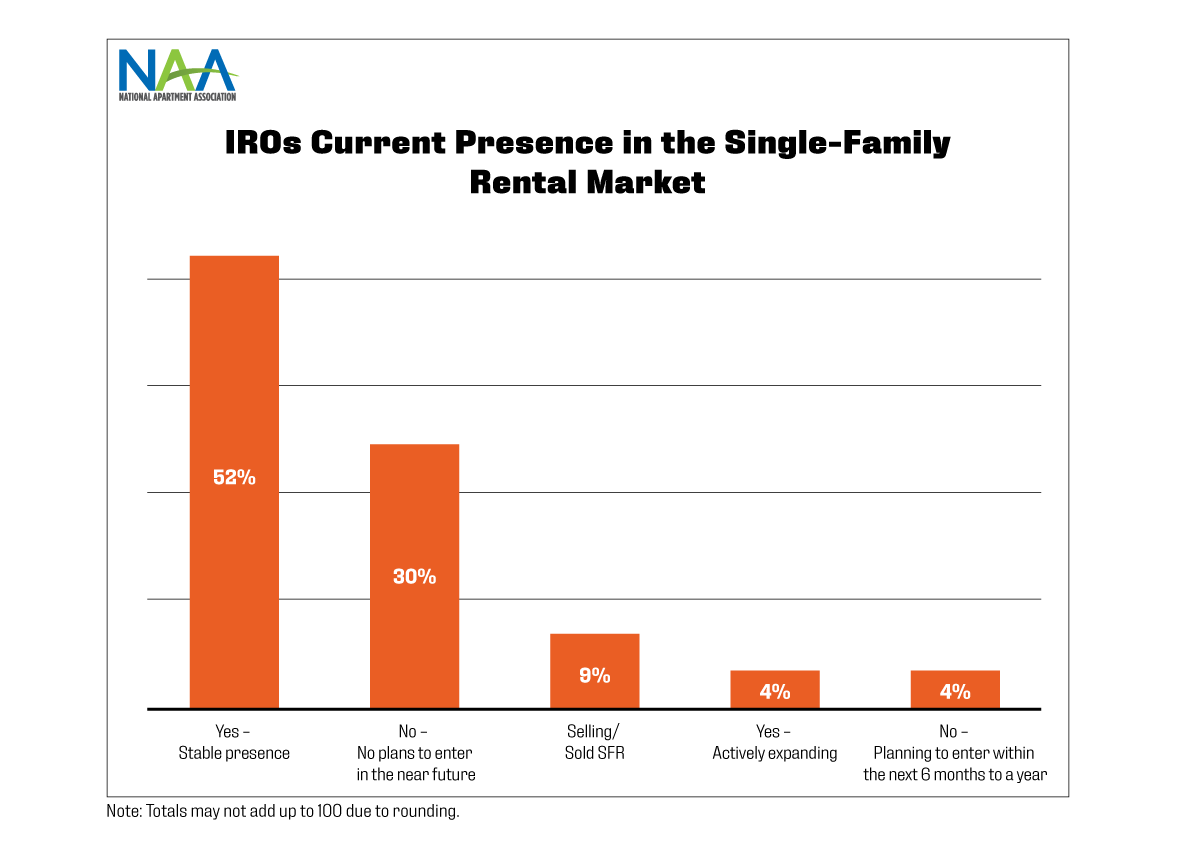
Growth preferences were similarly divided. While 55% see opportunity in multifamily, 45% favor single-family rentals. Over half already operate in the SFR space, making it a natural extension rather than a new direction. Compared to the broader market’s strong lean toward multifamily at 80%, IROs are prioritizing what is familiar, flexible and financially attainable.
Key IRO Results Takeaways
IROs navigate the current landscape with pragmatic caution. While many are feeling the pressure, particularly from expenses and regulatory shifts, they are not rushing into big changes. Instead, they are keeping costs in check, managing risk exposure, monitoring the market and leaning into their autonomy and simplicity to weather volatility. As larger players look to tech-driven efficiencies and strategic transformation, IROs have learned how to adjust quietly, react quickly and keep operations running without overextending themselves.
Erioreoluwa “Eri” Bajomo is NAA’s Industry Research Analyst.