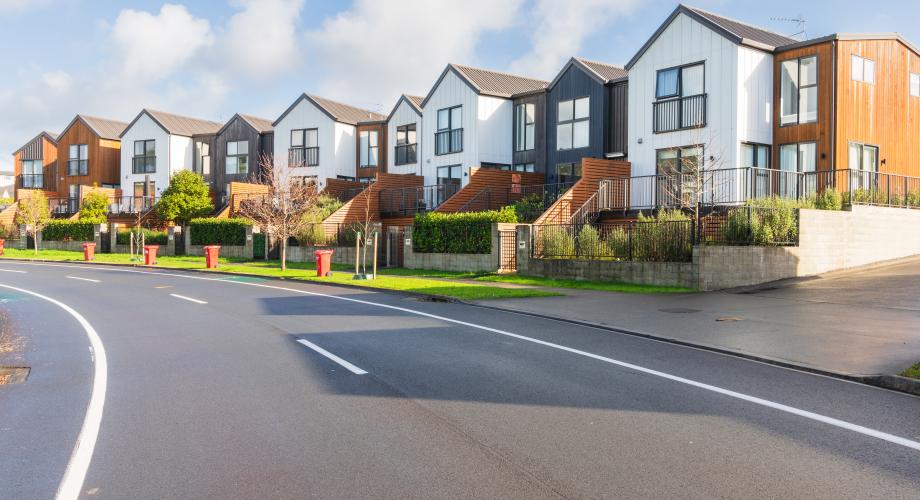
In the face of our nation’s longstanding housing supply crisis, some cities and states have made efforts toward innovative reforms that increase supply without sacrificing housing quality or safety. One trending example is single stairway reform, which allows for the construction of smaller, mid-rise apartment buildings with only one stairway instead of the current standard of two or three.
The Big Picture
This reform is a valuable way to reduce construction costs on smaller buildings, as a single-stairway four-to-six-unit building could cost between six and 13 percent less than a similar dual-stairway building – which translates directly to unit affordability. This reform would also bring the U.S. closer to global standards that are based on modern safety guidelines. While some of these reform efforts have been met with skepticism on the grounds of fire-safety, a report from Pew Charitable Trust shows that single-stairway buildings as tall as six stories do not put residents at greater risk and are as safe as other types of housing.
Currently, at least 19 states have considered some version of single stairway reform, and major cities such as New York, Seattle and Honolulu allow for single stairways in up to six story buildings. Below are two of the main approaches to this reform:
Colorado
In 2025, Colorado Governor Jared Polis signed the bipartisan HB 1273 into law. This law requires municipalities of at least 100,000 people to adopt building code language that allows the construction of five-story apartment buildings served by a single stairway. Municipalities are given until December 1, 2027, to adopt the new building code language and requires notice of adoption to be sent to local and state-level fire fighter groups for their awareness. Colorado HB 1273 serves as an example of a mandate-based approach where the state government requires some or all jurisdictions to participate.
Tennessee
Tennessee bills SB 2834 and HB 2925 serve as examples of an opt-in approach to single stairway reform. Under the laws, which were adopted in 2024, local jurisdictions are allowed to adopt building codes that permit the construction of single stairway buildings up to six stories. Since 2024, Jackson, Knoxville and Memphis have adopted these changes. Nashville, Tennessee has also considered adopting similar legislation. With the current cities that have adopted single stair reform, over 1.1 million, or about 1/7 Tennessee residents live in jurisdictions with single stairway reforms.
NAA’s Outlook
The U.S. must build 4.3 million new apartment homes by 2035 to meet the nation’s demand. It is critical that lawmakers at every level of government prioritize pro-housing policies that lower barriers to construction, development and renovation to address the nation’s need for quality housing across all price points.
Single stairway reform is one tool in policymakers’ toolbox to reduce development costs and boost the supply of affordable housing. The National Apartment Association (NAA) applauds efforts by policymakers to reduce the regulatory burdens faced by housing providers and developers, and commonsense building code reform can pave the way for new construction of affordable, quality housing. NAA continues to support its affiliate partners’ advocacy for pro-housing policy and track housing policy trends for its members at the state and local levels of government.
To learn more, contact publicpolicy@naahq.org.